How to Prepare Your Car for Winter: Expert Tips
January 15 2026 - dave@phatoon.com
When the first cold snap hits, the last thing you want to be thinking about is your car. Getting it ready for winter is a simple series of checks: looking at your tires, battery, and fluids, swapping to winter-specific wiper blades and washer fluid, and putting together a solid roadside emergency kit. Taking care of this before the first snowfall isn't just a good idea; it's your ticket to a stress-free winter on the road.
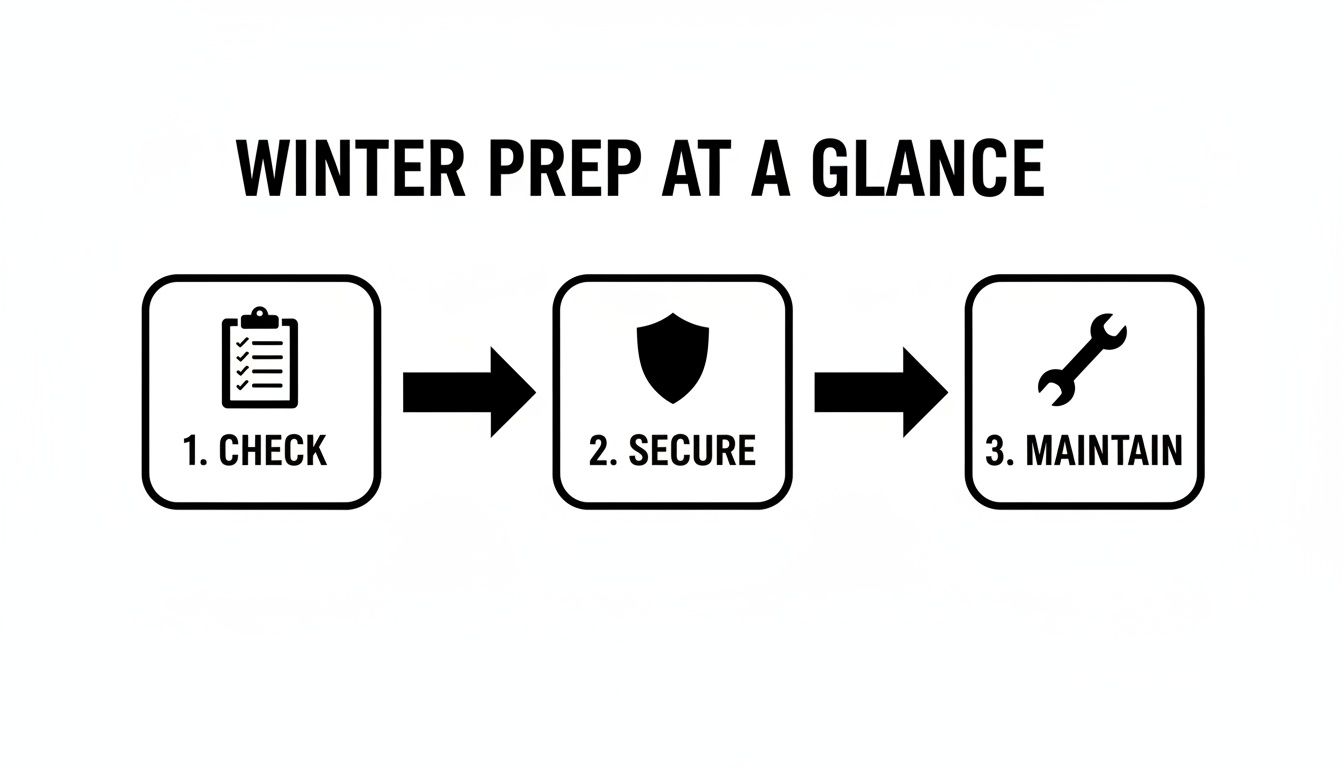 This approach makes it clear: a smart winterization plan involves proactive checks, protective measures, and consistent upkeep to keep you safe and your car reliable.
To make things even easier, here’s a quick-glance table of what we’ll be covering. Use this as a mental checklist before we dive into the details.
This approach makes it clear: a smart winterization plan involves proactive checks, protective measures, and consistent upkeep to keep you safe and your car reliable.
To make things even easier, here’s a quick-glance table of what we’ll be covering. Use this as a mental checklist before we dive into the details.
This table covers the high-level view. Now, let’s dig into what each of these checks actually involves.
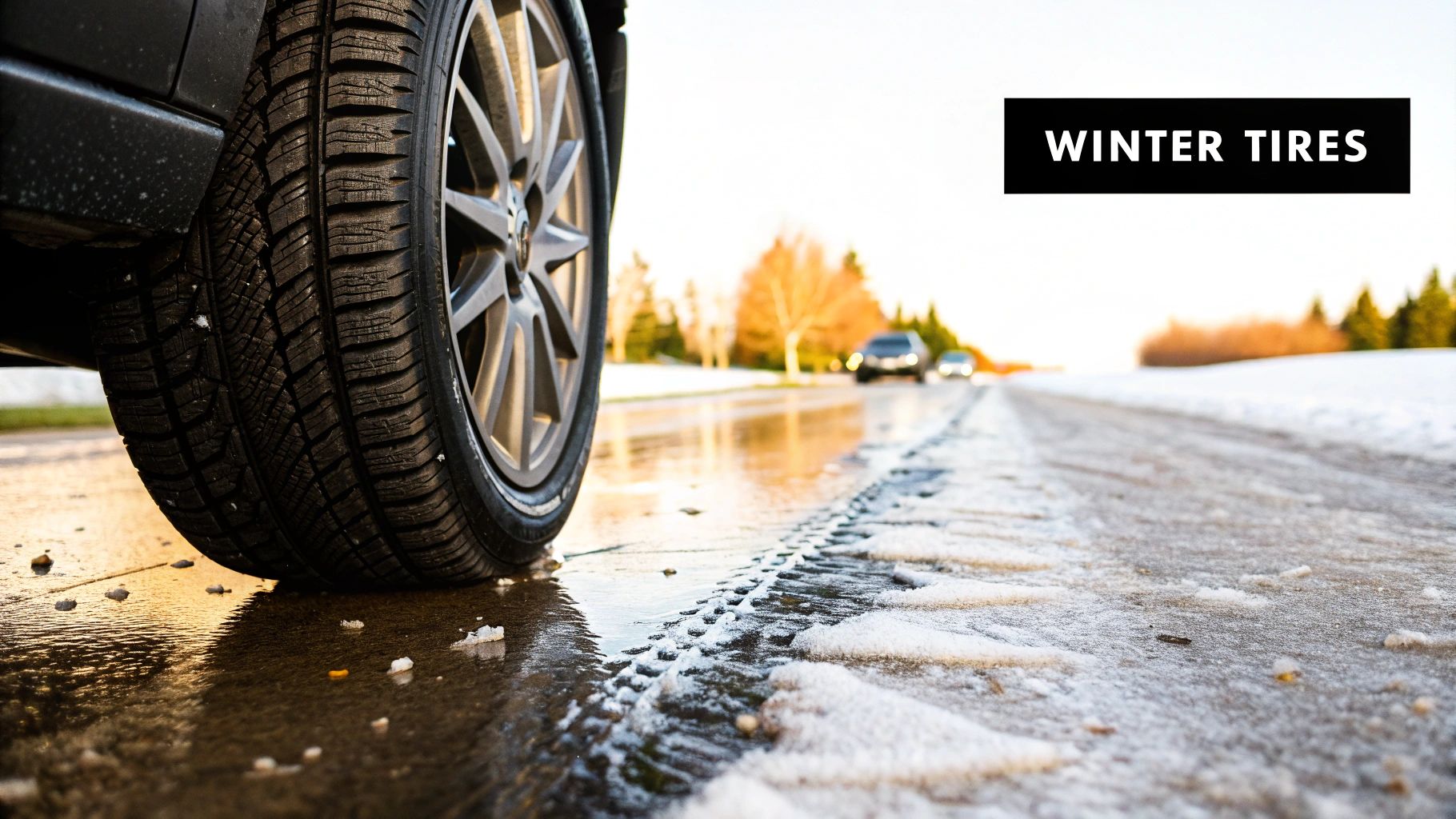
As you can see, the specialized design of winter tires provides a massive safety advantage when you need it most.
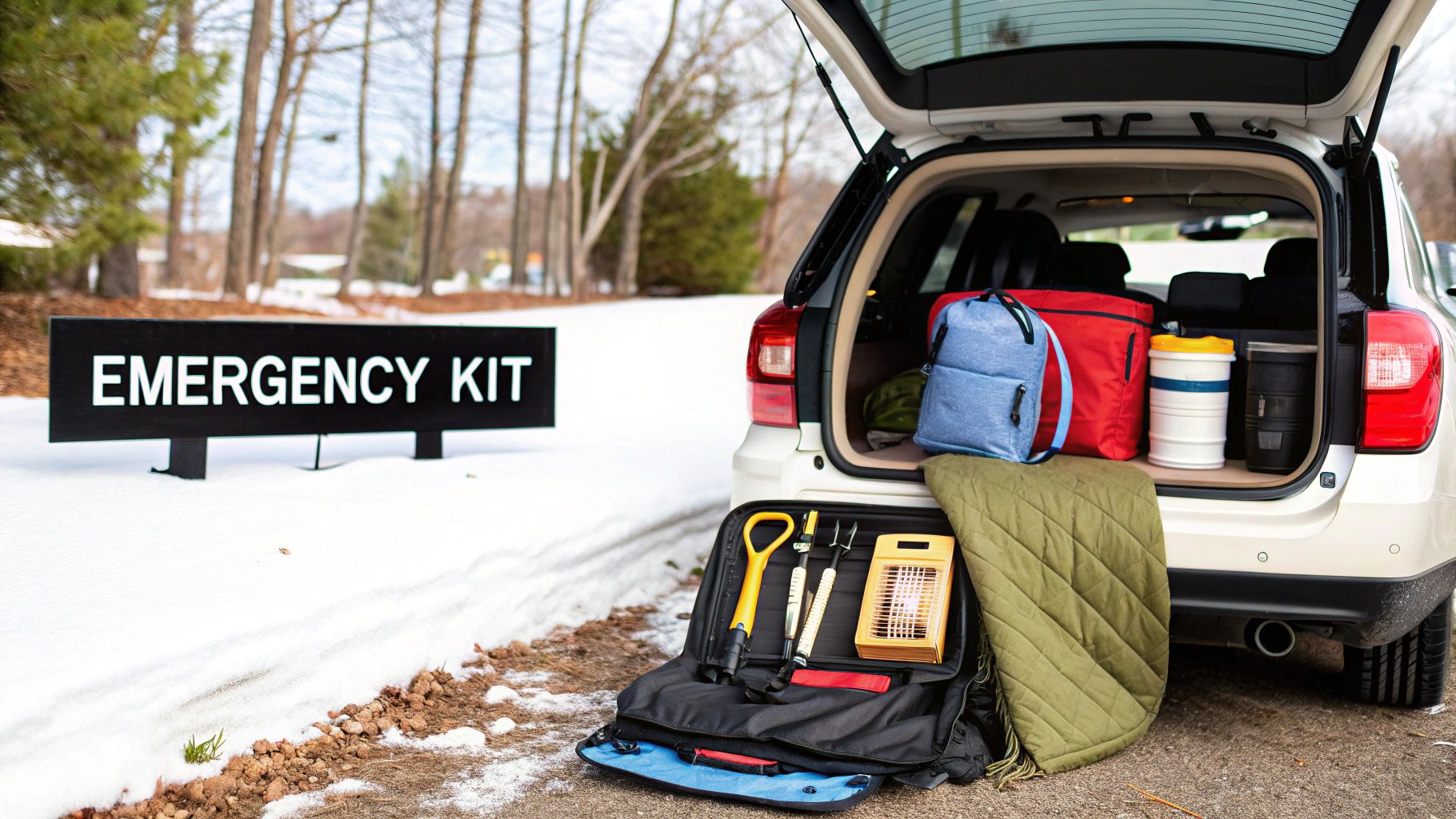 This isn't about grabbing a generic first-aid box from the store. It’s about assembling a practical, winter-specific survival kit tailored for a Long Island winter. These are the items that can turn a potentially dangerous situation into a manageable inconvenience.
Your safety and your vehicle's performance are what matter most to us. If you have more questions or just want a professional set of eyes to give your BMW a final check, the expert team at Habberstad BMW of Huntington is here to help. Schedule your winter service appointment today and take on the season with complete confidence. You can find us online at https://www.habberstadbmwofhuntington.com.
Why Winter Car Prep Is Essential for Long Island Drivers
Staring down a Long Island winter means preparing for a lot more than just a little snow. We're talking about icy patches on the Jericho Turnpike and sudden white-out squalls heading up to Northport. Prepping your car isn't just about avoiding a dead battery on a frigid morning; it's about making sure you and your family get home safely. We’re going to break down the absolute non-negotiables your car needs to be reliable and secure. Think of it as a small investment in your peace of mind. For BMW owners across Huntington, Commack, and Oyster Bay, this prep is even more critical to protect your vehicle’s performance and handling. Let's get you ready before the first snowflake even thinks about falling.The Real Risks of Skipping Winter Maintenance
Putting off winter prep isn't just an inconvenience. It can lead to genuinely dangerous situations. Cold weather puts a massive strain on a car's most vulnerable parts. A battery that seems perfectly fine in October can suddenly give up the ghost when the temperature drops below freezing, as the cold can slash its starting power by up to 50%. The numbers don't lie. Over 62% of drivers dealt with a cold-weather breakdown last year alone. Another recent survey found that 58% of drivers have lost control, slid, or spun out at least once in winter conditions. You can see the full breakdown of these winter driving risks in the Valvoline survey.Taking an hour or two for these checks in the fall can save you from hours spent stranded on the side of a frigid Long Island Expressway waiting for a tow. It's a trade-off that pays off every single time.
A Simple Framework for Winter Readiness
The thought of winterizing your car doesn't need to be overwhelming. You can boil it down to three core areas: checking your existing systems, securing your vehicle against the elements, and staying on top of routine maintenance. This quick visual breaks down the essential flow for getting your car ready.
This approach makes it clear: a smart winterization plan involves proactive checks, protective measures, and consistent upkeep to keep you safe and your car reliable.
To make things even easier, here’s a quick-glance table of what we’ll be covering. Use this as a mental checklist before we dive into the details.
Your Winter Prep At a Glance
| Component Check | Why It's Critical This Winter | When to Get It Done |
|---|---|---|
| Tires | Your only connection to slick roads. Proper tread and pressure are non-negotiable for grip. | Early to Mid-Fall |
| Battery | Cold weather kills weak batteries. A quick test prevents a no-start surprise. | Early to Mid-Fall |
| Fluids | Antifreeze, washer fluid, and oil need to be rated for freezing temperatures to work properly. | Mid-Fall |
| Wipers & Lights | Visibility is everything in a snowstorm. Worn wipers and dim lights are a recipe for disaster. | Mid-Fall |
| Brakes | You need every bit of stopping power on icy surfaces. Don't wait to check them. | Late Fall |
| Emergency Kit | If you do get stranded, having the right supplies can make all the difference. | Before First Snowfall |
Benefits of Proactive Winterization
Getting your car ready ahead of schedule offers some real, tangible benefits that go way beyond just dodging a breakdown. A well-maintained vehicle is simply a safer vehicle, giving you much better control and stopping power when the roads get slick. It also protects your investment. Here are the key advantages of getting ahead of the cold:- Enhanced Safety: Properly checked tires, brakes, and wipers are your first line of defense for visibility and control in hazardous conditions.
- Improved Reliability: A tested battery and the right fluids mean your car is far more likely to start and run smoothly on the coldest days of the year.
- Cost Savings: Catching a small issue now, like a worn belt or low coolant, can prevent a catastrophic and very expensive engine failure down the road.
- Peace of Mind: Honestly, this is the big one. Knowing your vehicle is prepared gives you the confidence to handle whatever winter throws your way.
Mastering Your Exterior and Tire Winterization
Your car’s exterior and tires are its first and most important line of defense against treacherous winter conditions. When it comes to navigating slick Long Island roads, nothing is more critical than the rubber connecting you to the pavement. Let’s start there, because this is about so much more than just swapping on a different set of tires.
Why Winter Tires Are a Game Changer
You might be thinking, "Are my all-season tires good enough?" The honest answer is that while they handle a variety of mild conditions well, they are a compromise. The rubber compound on all-season tires starts to harden and lose its grip as soon as the temperature dips below 45°F, which is pretty much the entire winter here. Winter tires, on the other hand, are engineered with a specialized, softer rubber compound that stays flexible even when it's freezing cold. This flexibility allows the tire to conform to the road surface, dramatically increasing traction. It’s the difference between your car confidently gripping the asphalt and dangerously sliding on it. The global winter tire market is now valued at a staggering $25.5 billion, and for good reason: the safety benefits on icy roads are undeniable. Studies show they can slash stopping distances by up to 20% on snow compared to all-seasons. You can read more about these tire market trends and safety impacts to see the data for yourself. To put it in perspective, here's how the two tire types really stack up when the temperature drops.All-Season Tires vs Winter Tires: A Head-to-Head Comparison
| Performance Metric | All-Season Tires | Winter Tires |
|---|---|---|
| Optimal Temperature | Above 45°F | Below 45°F |
| Rubber Compound | Hardens in cold, reducing grip | Stays soft and flexible for traction |
| Tread Design | Basic grooves for water evacuation | Deep, aggressive grooves for snow/slush |
| Stopping Distance (Ice/Snow) | Significantly longer | Up to 20% shorter |
| Cornering Grip (Cold) | Fair to poor | Excellent |
Checking Your Tread Depth and Inflation
Simply having the right type of tire isn't enough; its condition is paramount. Tread depth is what allows your tires to channel away snow, slush, and water, preventing hydroplaning and maintaining contact with the road. An easy way to check this is with the classic penny test. Just insert a penny into a tread groove with Lincoln's head pointing down. If you can see all of Honest Abe's head, your tread is worn below 2/32 of an inch, and it's time for new tires immediately. For winter, more tread is always better. Proper inflation is your other best friend against icy patches. Cold air is denser, causing tire pressure to drop about 1 PSI for every 10-degree drop in temperature. Underinflated tires make poor contact with the road, which kills your grip and control. Check your pressure weekly during the winter, inflating tires to the manufacturer’s recommended PSI found on the sticker inside your driver's door jamb.Ensuring Clear Visibility in Any Weather
Great tires are useless if you can't see where you're going. Winter throws sleet, snow, and salt spray at your windshield, making your wiper blades and washer fluid critical safety systems. Standard wiper blades get brittle and streak in the cold. Winter-specific blades are built tougher, often with a rugged rubber cover that prevents ice and snow from building up on the frame. This ensures they maintain even pressure against the windshield, clearing your view effectively every single time. Likewise, your washer fluid needs to be up for the job.- Summer Fluid: This stuff will freeze solid in your reservoir or, even worse, on your windshield, creating a dangerous sheet of ice right in your line of sight.
- Winter De-Icing Fluid: This is formulated with antifreeze agents to melt light frost and remain liquid at temperatures well below freezing, often down to -20°F or colder.
"Had my snow tires put on today by Habberstad BMW. They were so busy, but I still received the best service... They even gave me a car to use while I waited... Great communication and a friendly staff. They always go above and beyond."
- L.Z. via Google Reviews
A Simple Trick to Prevent Frozen Doors
One of the most frustrating winter morning rituals is fighting with a frozen-shut car door. This happens when moisture melts, seeps into the rubber door seals, and then refreezes overnight, basically gluing your door to the frame. Thankfully, there’s an incredibly simple fix. Grab a can of silicone spray lubricant from any auto parts store. Spray a small amount onto a cloth and wipe a thin, even layer over all the rubber weather stripping around your doors and trunk. The silicone repels water, preventing it from freezing and sealing you out of your own car. Taking these steps to prepare your car's exterior doesn't just make winter driving more convenient; it makes it fundamentally safer. From the ground up, these checks ensure you have the traction, visibility, and access you need to handle whatever winter throws your way.Essential Under the Hood Winter Checks
Now that the outside of your car is buttoned up for the elements, let's pop the hood. What's going on in the engine bay is just as critical, maybe even more so, when temperatures start to plummet. The cold puts a tremendous amount of stress on all the mechanical and electrical bits, so think of this as the heart of your winter prep plan. A healthy engine and its supporting cast are what will keep you moving when the snow starts flying.
Protect Your Car's Electrical Heart: The Battery
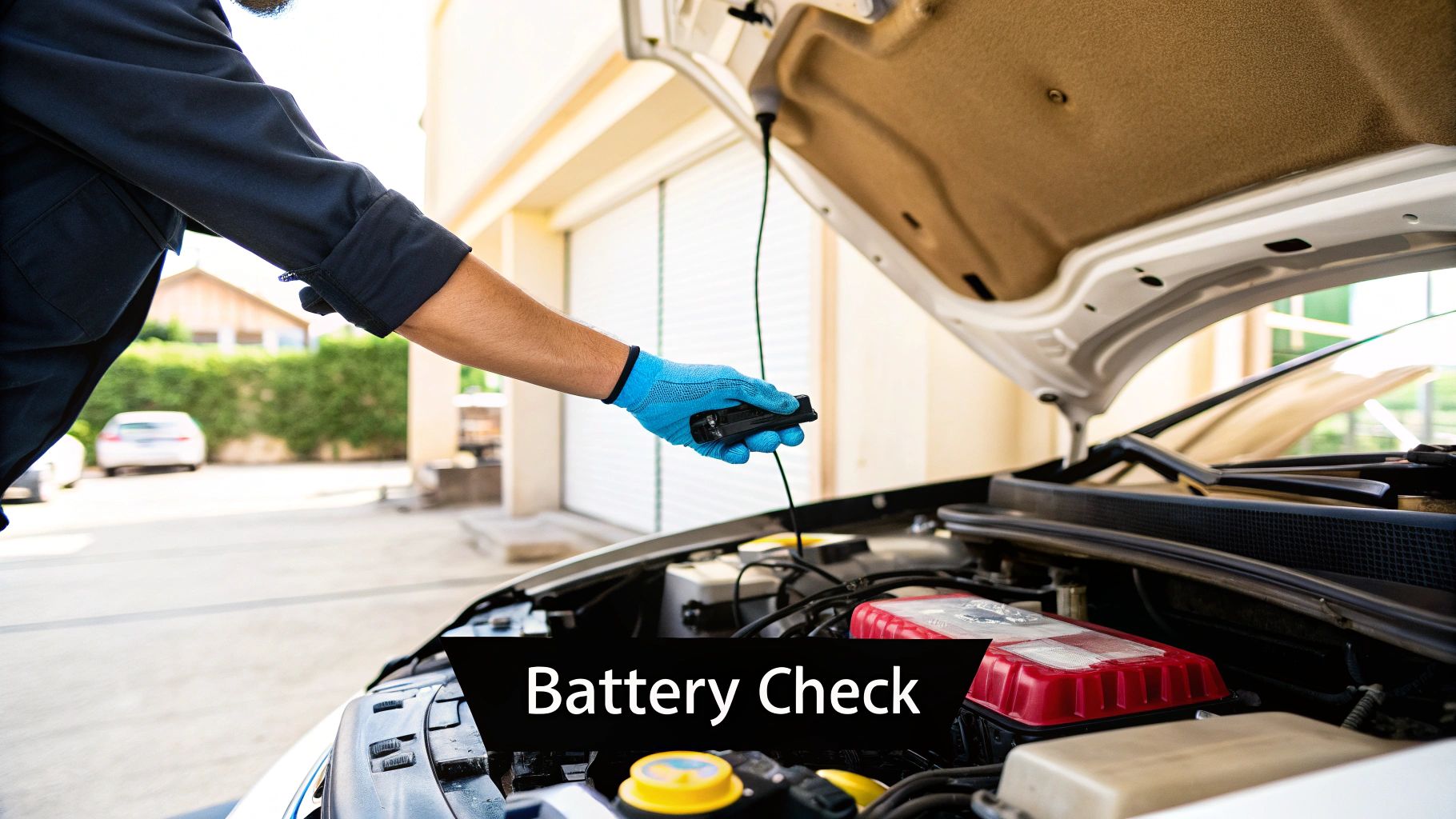
If there's one component that's going to give up on you in the dead of winter, it's the battery. The chemical reactions inside that generate electricity slow way down in the cold. At just 32°F, a battery loses about 35% of its starting power. Drop that to 0°F, and it's lost nearly half its muscle. That’s when you get that dreaded clicking sound instead of an engine turning over. Keep an eye out for the early warning signs. Are your headlights dimming when you idle? Is the engine cranking a little slower than usual in the morning? These are cries for help. Most car batteries only last three to five years, so if you're in that window, getting it professionally tested is a no-brainer. A simple test measures its cold cranking amps (CCA) and tells you if it has the guts to make it through another winter. This is a huge part of the seasonal rush we see in the service industry. The automotive repair market is a massive $0.81 trillion business, and a good chunk of that comes from seasonal needs like winter prep. North America accounts for 38.10% of that, largely because our harsh winters and aging cars (the average is over 12 years old) send people in for battery swaps and fluid checks. You can learn more about these automotive service market trends to see why being proactive is so common.The Lifeblood of Your Engine: Winter Fluids
Your engine relies on a specific cocktail of fluids to run properly, and that’s especially true when it's freezing outside. Neglecting them is a recipe for a very expensive, very stationary winter. Antifreeze and Coolant First up is your antifreeze, or coolant. Its main job is preventing the water in your cooling system from freezing, expanding, and cracking your engine block, a truly catastrophic failure. The standard is a 50/50 mix of antifreeze and distilled water, which protects you down to about -34°F. You can grab an inexpensive antifreeze tester at any auto parts store to check the ratio yourself. Winter Grade Oil Motor oil gets thick and syrupy in the cold. If it’s too thick, it can't circulate properly when you first start the car, causing premature engine wear. For many cars, especially performance models like BMWs, it's a good idea to switch to a lower viscosity "winter grade" oil (like a 5W-30 instead of a 10W-30). This helps it flow much more easily on those frigid starts. Always, always check your owner's manual for what the manufacturer recommends.Inspecting Belts and Hoses for Weakness
The rubber components under your hood, things like the serpentine belt and all the coolant hoses, get hard and brittle in the cold. A belt that looked perfectly fine in August can develop tiny cracks that cause it to snap when the temperature plunges. Grab a flashlight and take a minute for a visual inspection.- Belts: Look for any fraying, cracking, or glazing (a shiny, smooth surface).
- Hoses: Give the main radiator hoses a squeeze (only when the engine is completely cool!). They should feel firm but have some give, not be rock-hard or feel mushy.
Your defroster isn't just for comfort; it's a critical safety system. If it's not working, you have no way to clear frost or condensation off your windshield. You're effectively driving blind.Test both your front and rear defrosters before you need them. Crank them up to full blast. Are they blowing hot air? Is the glass clearing quickly? If the airflow feels weak or it isn't getting hot, you could have a problem with the blower motor or a thermostat issue. This is a non-negotiable fix for safe winter driving.
Building Your Roadside Winter Emergency Kit
Even a perfectly maintained vehicle can't predict a sudden whiteout on the Long Island Expressway or a patch of black ice on a back road. When the unexpected happens, what you have inside your car becomes just as important as what's under the hood. A prepped car is only half the battle. Building a proper winter emergency kit is the other, crucial half.
This isn't about grabbing a generic first-aid box from the store. It’s about assembling a practical, winter-specific survival kit tailored for a Long Island winter. These are the items that can turn a potentially dangerous situation into a manageable inconvenience.
Assembling Your Core Survival Items
Your first priority if you get stranded is staying warm, visible, and hydrated. Picture yourself stuck for a few hours waiting for a tow truck in freezing temperatures. What would you need? Here are the absolute essentials:- Warmth and Shelter: A heavy wool blanket or a mylar "space blanket" is non-negotiable. Also, pack extra hats, gloves, and socks for everyone who might be in the car.
- Visibility: A powerful LED flashlight with extra batteries is key. Roadside flares or reflective triangles are also vital to ensure other vehicles can see you, especially in a blizzard.
- Communication: A portable power bank for your phone is a modern-day lifesaver. You can't call for help if your phone is dead.
- Sustenance: Pack some non-perishable, high-energy snacks like granola bars or nuts, along with a few bottles of water. Dehydration is still a real risk in cold weather.
Adding Practical Winter Tools
Beyond personal survival, you need tools to help get yourself unstuck or deal with common winter frustrations. These are the things that can help you solve the problem yourself and get back on your way. Your tool list should include:- A sturdy ice scraper and a snow brush.
- A collapsible or small shovel to dig out your tires.
- Jumper cables, because dead batteries are the number one winter culprit.
- A bag of sand, salt, or even non-clumping kitty litter for emergency traction under your drive wheels.
"Had a flat tire on my 2021 BMW. Made it to Habberstad… Ron in service got me a new tire immediately and I was on my way in less than an hour! Unbelievable service! They saved the day!!!"Having these tools on hand can mean the difference between a five-minute fix and a five-hour wait on the side of the road.
- Joseph C. via Google Reviews
Smart Driving Tips for Icy Conditions
Your emergency kit is your backup plan. Your primary plan should always be avoiding the emergency in the first place, which comes down to adjusting your driving style for the conditions. Decades of driving in these conditions have taught us a few things. First, double your following distance from the usual three seconds to at least six. This gives you much more time to react and stop on slick surfaces. Second, if you feel your car start to skid, your instincts will scream to slam on the brakes. Don't do it. Instead, take your foot off the gas and gently steer in the direction you want the car to go. This helps the tires regain traction. Ultimately, the most important piece of driving advice is knowing when not to drive at all. If the weather is truly terrible and you don't absolutely have to be on the road, stay home. No trip is worth risking your safety.Special Winter Considerations for Your BMW
Owning a BMW means you appreciate a higher level of engineering. That precision, however, demands specialized care, especially when you’re facing down a harsh Long Island winter. While the general winterization checklist is a great starting point, your BMW’s advanced systems and performance characteristics require a more focused approach. Taking these extra steps is about more than just surviving the cold. It's about ensuring your car performs as it was designed and protecting the performance, safety, and long-term value of your investment through the toughest season of the year.Maximizing Your xDrive System
Many BMWs on the road today feature the xDrive intelligent all-wheel-drive system. This isn't your average AWD. xDrive is proactive; it constantly monitors road conditions and distributes power between the axles to prevent traction loss before it happens, not after you're already slipping. But xDrive isn't magic. Its effectiveness depends entirely on two things: the right tires and proper driving technique. To get the most from it:- Pair it with Winter Tires: xDrive can only work with the grip it's given. All-season tires harden up and lose their bite in the cold, severely limiting what the system can do. Equipping your BMW with a dedicated set of winter tires gives xDrive the traction it needs to perform at its peak.
- Drive Smoothly: Abrupt acceleration or jerky steering can overwhelm any traction system, no matter how sophisticated. Gentle inputs on the throttle and smooth steering allow xDrive to intelligently manage torque and keep you stable on slick, icy roads.
The Importance of Genuine BMW Parts and Fluids
When it's time for service, it can be tempting to use a generic repair shop or grab some off-the-shelf fluids. For a BMW, this is a significant risk. These vehicles are built with incredibly tight tolerances, and their complex systems are engineered to work with very specific fluid formulations and parts. For example, using the wrong type of antifreeze can lead to corrosion inside your aluminum engine block, a problem a general-purpose product might not prevent. Similarly, the wrong transmission fluid can wreak havoc on the intricate workings of a ZF automatic transmission, leading to poor performance and potentially voiding your warranty.Using genuine BMW parts and manufacturer-approved fluids isn't about paying for a brand name. It's about ensuring compatibility, preserving your vehicle's intricate systems, and maintaining its long-term health and performance.A technician who isn't a BMW specialist simply may not be aware of these specific requirements, which can easily lead to costly mistakes down the line.
Protecting Your BMW's Finish from Road Salt
Throughout the winter, Long Island roads are covered in a corrosive mix of salt and brine. This stuff is absolutely brutal on your car's paint, clear coat, and undercarriage components, dramatically accelerating rust and damage. Your best defense is a thorough wash and a high-quality wax application in the fall, before the first storm hits.- Wash Thoroughly: Pay special attention to the wheel wells and the undercarriage, where all that salt and grime loves to accumulate.
- Apply a Sealant or Wax: A layer of carnauba wax or a modern paint sealant creates a hydrophobic barrier. This protective layer makes it much harder for salt and moisture to stick to your paint in the first place.
- Wash Regularly: Don't let the salt sit. Make a point to wash your car at least every couple of weeks all winter, especially right after a snowstorm, to rinse away those corrosive materials.
Know When to See a Professional
There's a real satisfaction in handling your own car care, but it’s just as important to be honest about what you can tackle in the driveway versus what needs an expert’s touch. Some winter prep is straightforward, but other jobs require specialized tools and diagnostic gear to get right. Knowing the difference is the key to making sure your car is truly ready for the harsh months ahead. Simple checks like topping off winter washer fluid, swapping in new wipers, or checking tire pressure are perfect for any car owner. When it comes to the complex systems that keep you safe on the road, though, a professional eye is invaluable. This is where a certified tech can save you from a massive headache down the line.What to Leave to the Pros
Certain winter prep tasks involve your car’s most critical safety systems. This isn't the place for guesswork, as a small mistake can snowball into a huge problem. You’ll want to schedule a service appointment for these essential checks:- Comprehensive Battery and Charging System Test: A technician can test not just the battery's health but its cold cranking amps (CCA) and the alternator's output. This full system check is the only way to be sure your car has the juice to start on the coldest Long Island morning.
- Brake System Inspection: A pro will measure your brake pad thickness down to the millimeter, check for rotor wear, and inspect every inch of the brake lines for corrosion or leaks. This guarantees you have maximum stopping power when you hit an icy patch.
- Coolant System Flush and Fill: This is more than just topping off antifreeze. A full flush gets rid of old, degraded coolant and any gunk in the system, then refills it with the precise mixture your BMW needs for ultimate protection against freezing.
"I had an issue with my car and was able to make an appointment for the next day. They took my car in right away, found the issue within an hour and fixed it. I always have a great experience at Habberstad BMW. They are the best!"
- Frank G. via Google Reviews
The Value of a Professional Winter Check-Up
Think of a professional winter inspection as a smart investment in your safety and your sanity. A certified technician knows exactly what to look for, spotting potential issues that are practically invisible to the untrained eye. They'll catch the brittle hose that’s about to fail or the belt showing the first subtle signs of cracking. A comprehensive check-up gives you a complete picture of your vehicle's health, allowing you to handle small issues before they leave you stranded in a snowstorm. Booking that appointment is really about gaining the confidence that your car is 100% ready for whatever winter throws at it.Your Top Winter Car Prep Questions, Answered
Even with the best checklist, some questions always come up as you get your vehicle ready for the cold. We hear them all the time from our customers here in Huntington, so we’ve put together some clear, straightforward answers to the most common ones. Let's clear up those final details so you can drive with confidence.How Often Should I Check My Tire Pressure In Winter?
You should be checking your tire pressure at least once a month, but a better habit is to check it any time there's a big temperature drop. Cold air is denser, which means your tire pressure can fall by about 1 PSI for every 10-degree drop in the outside temperature. While your BMW’s Tire Pressure Monitoring System (TPMS) is a great safety net, it’s not a substitute for a good old-fashioned manual check. Using a quality pressure gauge is the only way to know for sure that your tires are inflated to the perfect spec for maximum grip on icy Long Island roads.Are All-Season Tires Really Good Enough for a Long Island Winter?
This is a question we get a lot. While modern all-season tires have come a long way, they are still a compromise by design. The rubber compound they use is made to work across a huge range of temperatures, but it starts getting hard and losing its grip right around 45°F. When the temperature really plummets, that loss of flexibility can make a huge difference.For true safety and performance in the cold, nothing beats a dedicated set of winter tires. They use a special rubber compound that stays soft and pliable in freezing weather, giving you much better traction for accelerating and dramatically shorter stopping distances on snow and ice. We always recommend them for a Long Island winter.
Do I Need a Specific Antifreeze for My BMW?
Yes, this is non-negotiable. Using the wrong coolant or antifreeze can lead to serious corrosion and expensive, long-term damage to your BMW’s cooling system. These systems are engineered with specific materials like aluminum and magnesium that require a very precise formula. Generic, off-the-shelf antifreeze from the auto parts store simply doesn't have the specific additives needed to protect the complex components of your engine. Always, always use the genuine BMW antifreeze specified for your vehicle. It’s the only way to ensure your engine is fully protected all winter.Your safety and your vehicle's performance are what matter most to us. If you have more questions or just want a professional set of eyes to give your BMW a final check, the expert team at Habberstad BMW of Huntington is here to help. Schedule your winter service appointment today and take on the season with complete confidence. You can find us online at https://www.habberstadbmwofhuntington.com.